Which Defect Results in Increased Pulmonary Blood Flow
This malady accounts for 20 to 30 per cent of all congenital cardiac defects and is representative of a cardiac lesion that increases pulmonary blood flow. This causes an overload of pulmonary circulation and an increased workload for the heart.
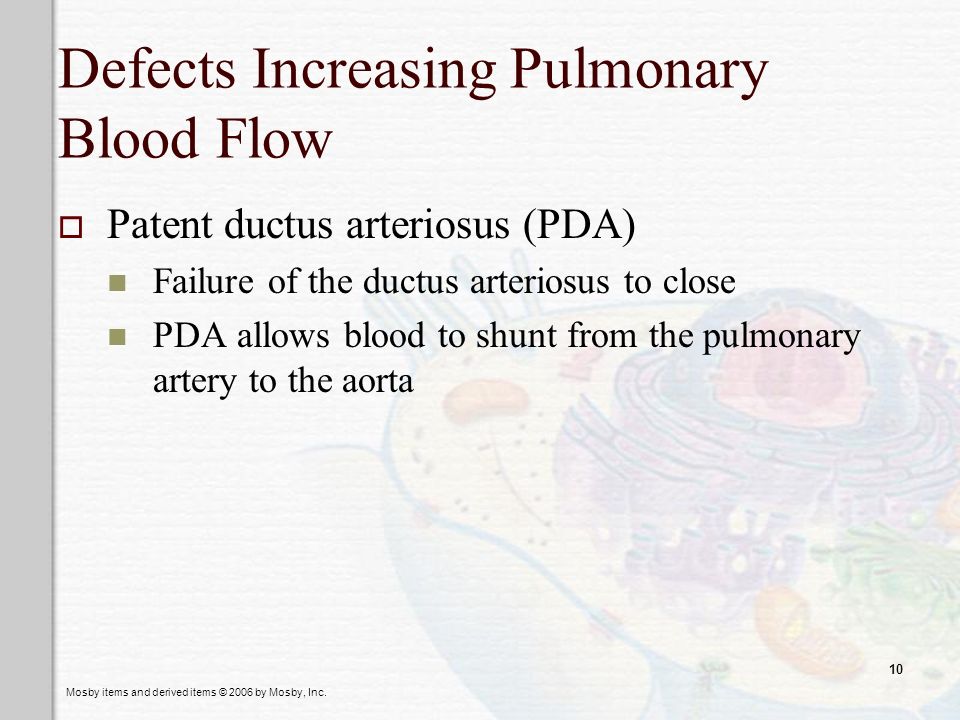
Alterations Of Cardiovascular Function In Children Ppt Video Online Download
Blood flows from the left atrium higher pressure into the right atrium lower pressure and then to the lungs via the pulmonary artery.

. This results in increased work for the heart and lungs. Tricuspid atresia results in decreased pulmonary blood flow. Hypertrophy of the right ventricle due to pulmonary stenosis.
Up to 24 cash back This is when ductus arteriosis fails to close after birth or reopens due to hypoxia. The defects that cause an increase in pulmonary blood flow are Atrial Septal Defect Ventricular Septal Defect Atrioventricular Canal Defect and Patent. Pulmonary artery stenosis which decreases blood flow to the lungs.
Intracardiac communication along the septum or an abnormal connection between the great arteries allows blood to flow from the high-pressure left side of the heart to the low-pressure right side of the heart- Atrial septal defect ASD an abnormal opening between the atria that causes an increased flow of oxygenated blood into. In TOF the degree of cyanosis depends on the severity of PS that is the pulmonary blood flow reduces with an increase in the severity of PS thereby causing more severe cyanosis. The common manifestations 3 of defects w increased pulmonary blood flow.
This article examines common cyanotic congenital heart lesions that result in an increase in pulmonary blood flow. The left side pumps the oxygen-rich blood to the rest of the body. The four features that comprise tetralogy of Fallot--right ventricular hypertrophy VSD overriding aorta and subpulmonary stenosis--are.
The most common congenital cardiac defect is VSD. Increase blood volume on right side of heart increased pulmonary blood flow decreased systemic blood flow. However several congenital heart defects cause systemic cyanosis with increased PBF such as TGA truncus arteriosus and TAPVR.
Up to 24 cash back This is the combination of four heart defects that interfere with the blood flow to the lungs. The aim of the present study was to characterise the effects of increased pulmonary flow induced by an aortocaval shunt in the monocrotaline rat model for pulmonary hypertension in terms of. The complications caused by increased pulmonary blood.
These data suggest that increased pulmonary blood flow from ventricular septal defect results in altered carnitine and mitochondrial homeostasis decreased nitric oxide signaling and increased reactive oxygen species production. Because neonates are discharged from the hospital soon after birth this magnifies the importance of each. Tetralogy of Fallot and Tricuspid Atresia cause decreased pulmonary blood flow and used to be classed as cyanotic heart defects.
Transposition of the great arteries Rational. Atrial Septal Defect Ventricular Septal Defect Atrioventricular Canal Defect and Patent Ductus Arteriosus are all abnormal openings in the heart that cause increase pulmonary blood flow. Tetralogy of Fallot is a combo of 4 defects-these are worth committing to memory for tests- 1 Pulmonic Stenosis 2 Right Ventricular Hypertrophy 3 Overriding Aorta 4 Ventricular Septal Defect.
Causes and Patho of Defects causing DECREASED Pulmonary Blood Flow. Often an obvious cardiac reason for cyanosis is decreased PBF. -the obstructed pulmonary blood raises pressures on the hearts Right side higher than.
An overriding aorta that is displaced to the right so there is flow from both ventricles. -CYANOSIS hypercyanotic spells polycythemia poor feeding poor weight gain delayed development diaphoresis murmur clubbing and fatigue. What defect is an abnormal opening between atria.
Although lesions which increase pulmonary blood flow may vary in incidence they frequently have common symptomatology. You can use the mnemonic device PROVe to help you remember this. These lesions include transposition of the great arteries truncus arteriosus total anomalous pulmonary venous connection tricuspid atresia and single ventricle.
Tricuspid atresia results in decreased pulmonary blood flow. Normal heart size the darker lung fields and slightly indistinct hilar vascular markings on the chest X-ray indicated decreased pulmonary blood flow. The three most common types of.
Ventricular septal defect VSD what happens to the size of the heart in atrial septal defect. The pulmonary artery is narrowed so blood cant. Atrial septal defect results in increased pulmonary blood flow.
Defects with increased pulmonary blood flow. Blood continues to flow from the higher pressure of the aorta into the pulmonary artery with oxygenated blood recycled back to the lungs. Pulmonic stenosis ventricular septal defect overriding aorta right ventricular hypertrophy.
C Atrial septal defect results in increased pulmonary blood flow. Pulmonic stenosis ventricular septal defect aortic hypertrophy left ventricular hypertrophy a. What is the Ventral Septal Defect VSD.
Of the five Ts of cyanotic congenital heart disease--tetralogy of Fallot TGA TAPVC truncus and tricuspid valve abnormalities tricuspid atresia stenosis and displacement--the first and last are commonly associated with diminished PBF. VSD VENTRAL SEPTAL DEFECT- increased pulmonary blood flow defect 28. Chronic increased pulmonary blood flow is considered a pre-requisite for the induction of advanced vascular lesions in pulmonary arterial hypertension in congenital heart defects.
Blood flows from the left atrium higher pressure into the right atrium lower pressure and then to the lungs via the pulmonary artery. Pulmonic stenosis is an obstruction to blood flowing from the ventricles. Ventricular Septal Defect VSD.
Normally the right side of the heart pumps blood to the lungs to get oxygen. A VSD allows oxygenated blood to mix with deoxygenated blood causing increased blood pressure and increased blood flow in the lung arteries. Defects with Increased Pulmonary Blood Flow.
Abnormal opening between the right and left ventricles Classified according to location membranous 80 or muscular-Or can be like swiss cheese variety where there is multiple Large variation in size. Tachypnea tachycardia and CHF. Congenital heart defects may cause cyanosis.
Pulmonic stenosis is an obstruction to blood flowing from the ventricles. Atrial septal defect ASD what defect is an abnormal opening between ventricles. The four defects include.
So lets think about the way these defects will affect blood flow. -decrease the amount of blood that gets oxygenated by the lungs.

Cardiovascular Stressors And Adaptation Ppt Video Online Download

Anatomy Embryology And Clinical Aspects Of Congenital Heart Disease What Can Be Put Into Quizlet Embryology Of Congenital Heart Defects Just Embryo Of The Heart Flashcards Quizlet
Pin Op Med Cardiology

Rosh Review Pediatric Nursing Nursing Notes Tetralogy


Comments
Post a Comment